Boots, Mud, and Magic: The Grassroots Game That's Stealing Football's Heart Back
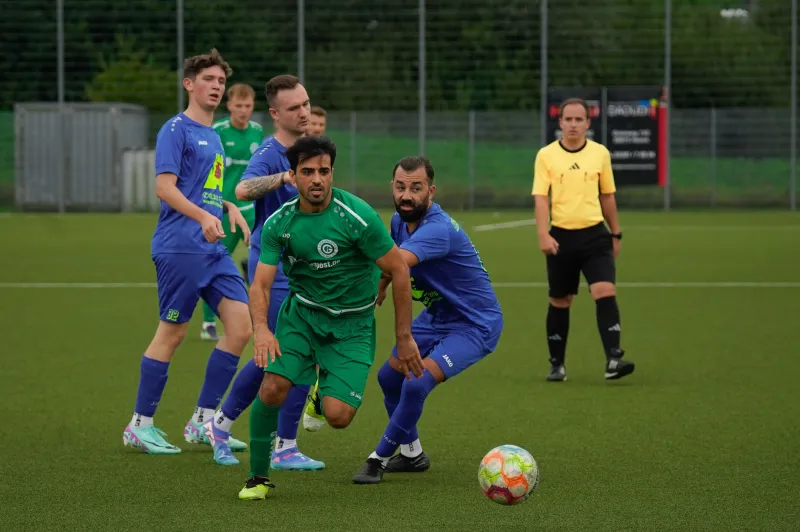
There's a particular kind of cold that only exists at a Sunday morning kick-off. The sort that gets into your bones somewhere around the warm-up and doesn't leave until you're three pints deep in the clubhouse afterwards. If you know, you know. And right now, more people across Britain are getting to know it than at any point in recent memory.
Grassroots and non-league football is booming. Not just ticking along — genuinely, properly booming. Attendances at Step 5 and below are climbing. New clubs are forming. Old ones are being resurrected by communities who refused to let them die. And somewhere in all of that muddy, chaotic, beautiful mess, a quiet revolution is reshaping what we think British football actually means.
The Numbers Don't Lie
The FA's own participation data tells a story the Premier League's marketing department couldn't manufacture. Adult recreational football saw a significant uptick in registered players following the pandemic, with Sunday league registrations in particular surging across England, Wales, and Scotland. The grassroots game — long treated as an afterthought by governing bodies and broadcasters alike — is now a genuine cultural force.
Part of this is demographic. A generation that grew up watching Ronaldo and Gerrard on telly eventually wants to lace up itself. But there's something deeper happening too. When everything feels polished, corporate, and slightly unreal — when a single Premier League player earns more in a week than most fans do in a decade — the rawness of Sunday league football starts to feel like a refuge. It's sport without the performance. Just the game.
More Than a Kick-About
Visit any non-league ground on a Saturday afternoon and you'll find something the top flight has largely lost: proximity. You can hear the manager losing his mind on the touchline. You can watch a centre-back argue with his own goalkeeper from ten metres away. You can buy a decent cup of Bovril for under two quid and actually feel the atmosphere rather than watch it on a screen.
Clubs like Hebburn Town in the North East, Hashtag United in Essex, and FC United of Manchester have each carved out their own identity — and their own passionate followings — by leaning into what makes non-league football different rather than trying to imitate the professional game. They've built communities, not just supporter bases. And people are turning up for it.
Hashtag United, born from a YouTube channel, might seem like an outlier — the social media experiment that somehow became a real football club. But their story actually underlines a wider truth: that people are hungry for football they can connect with, football that feels like it belongs to them.
Breeding Ground or Dead End?
For years, the Sunday league was seen as where football careers went to wind down. The ex-semi-pro still nutmegging teenagers in a county league at 38. The goalkeeper who had a trial at a League Two club once and hasn't let anyone forget it. And yes, those characters still exist — long may they continue to.
But increasingly, grassroots football is also where careers begin. The non-league pyramid has become a legitimate pathway. Players like Jamie Vardy (Stocksbridge Park Steels), Charlie Austin (Poole Town), and Rickie Lambert (Macclesfield Town) all spent time in the non-league world before reaching the very top. They're not anomalies. They're proof that the route from muddy pitch to Premier League, while narrow, is real.
Scouts from professional clubs are paying more attention than they used to. With academy systems under increasing financial pressure and the cost of traditional recruitment spiralling, there's a growing recognition that non-league football is an undervalued market. A hungry twenty-year-old playing in the Northern Premier League for expenses and the love of the game might just be the bargain of the century for a League Two club willing to take a punt.
The Community Angle Nobody's Talking About
Strip away the talent development conversation and you're still left with something important: what these clubs mean to the places they represent.
In towns where professional football has never existed, or where the local team has drifted into irrelevance, Sunday league and non-league clubs fill a gap that nothing else quite can. They're social infrastructure. They're the reason a group of blokes in their forties still see each other every week. They're where kids learn to lose gracefully, win without gloating, and shake hands with the opposition even when it hurts.
During the pandemic, when professional sport went behind closed doors and the football industry retreated into its bubble, it was grassroots clubs that quietly kept communities connected. Organising food banks. Checking in on elderly members. Keeping the WhatsApp group alive even when the pitches were empty.
Nobody gave them a BAFTA for it. Nobody really noticed. But they did it anyway, because that's what these clubs are. They're not businesses with a football team attached. They're communities with a football club at the centre.
Saturday's Terrace, Sunday's Pitch
There's a certain type of football fan — and you'll find them on terraces up and down the country — who'll tell you the game lost something when the money arrived. When replica shirts started costing seventy quid. When standing was replaced by sitting. When the away end became a hospitality suite.
They're not entirely wrong. But here's the thing: that thing they're mourning hasn't disappeared. It's just moved. It's on a recreation ground in Rochdale at 10:30 on a Sunday morning. It's on a roped-off pitch in Rhyl with forty people watching. It's in a changing room that smells of Deep Heat and last week's kit bag, where someone's arguing about who's on corners and the manager is trying to give a team talk over a broken radiator.
The soul of British football, the bit that actually matters, never left. It just never bothered with the cameras.
The Future Looks Like This
Non-league football doesn't need saving. It doesn't need the Premier League to discover it, monetise it, and package it into a subscription service. It's doing just fine on its own terms, thank you very much.
What it does deserve is recognition. From the FA, from broadcasters, from the wider football conversation. Not to be turned into content — though the stories are undeniably compelling — but to be acknowledged as the foundation everything else is built on.
Every professional footballer started somewhere. Every manager had a first game. Every club was once a group of people who decided to do something daft and brilliant and communal, and show up every week regardless of the weather.
The grassroots game isn't the footnote to British football. It's the opening chapter. And right now, it's writing some of its best material yet.