Dad's Team or My Team? The New Generation Rewriting Football's Unwritten Rules
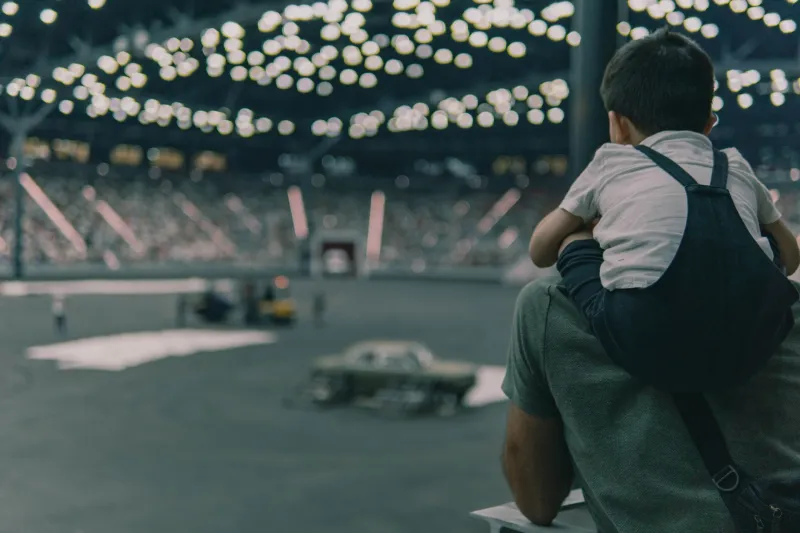
There's a moment most football fans of a certain age can pinpoint with frightening precision. The first time they were taken to a match. The smell of the pie stand. The roar that hit them like a wall. The hand holding theirs in the crowd. For millions of people across Britain, that moment didn't just introduce them to a club — it installed one. Hardwired it in, deep and permanent, like a postcode or a surname.
But something is shifting on the terraces, and it's not just the seats.
The Inheritance Nobody Asked For
Ask around and you'll find them everywhere — fans who grew up wearing their dad's colours, singing their mum's songs, without ever really choosing any of it. For a long time, that was fine. More than fine, actually. It was the whole point. Football loyalty wasn't supposed to be chosen. It was supposed to be inherited.
"I never questioned it," says Marcus, a 47-year-old from Wolverhampton whose father took him to Molineux for the first time aged six. "You supported your dad's team. That was just... the deal."
His son, Callum, now 19, tells a different story.
"I tried, I really did," Callum says, with the kind of apologetic honesty that clearly cost him something to admit. "But I'd grown up watching YouTube compilations, following players on Instagram. By the time I was 14, I felt more connected to a club 200 miles away than the one my dad had taken me to my whole life. It wasn't a decision I made overnight. It just... happened."
That tension — between what was handed down and what feels genuinely yours — is playing out in living rooms and WhatsApp groups all over the country.
Geography Used to Do the Work
For most of the twentieth century, geography was the great enforcer of football loyalty. You supported the team from your town. Simple as. If you were born in Sunderland, you were a Sunderland fan. If you grew up in Leicester, you went to Filbert Street, then the King Power. The local club wasn't just a preference — it was part of your identity, stitched into the fabric of where you came from.
But Britain has changed. People move more. Towns have changed character. Communities that once had a single, obvious football club now have residents who've arrived from somewhere else entirely, bringing their allegiances with them — or, increasingly, their children who've grown up without any allegiance at all.
Sophie, 23, grew up in Bristol after her family relocated from Newcastle when she was three. Her dad is a lifelong Newcastle United supporter. She has never been to St James' Park. She watches football occasionally, follows a handful of players on social media, and cheerfully admits she doesn't really have a club.
"My dad's gutted about it, in a jokey way," she laughs. "But what was I supposed to do? I didn't grow up there. I don't feel it the way he does. I don't think that makes me a bad person."
It doesn't. But for a certain generation of fans, it does feel like something has been lost.
The Social Media Complication
If geography used to enforce loyalty, social media has done something far more complicated to it. It has simultaneously expanded and diluted the concept of being a fan.
A teenager today can follow every training session of a club on the other side of the world. They can have parasocial relationships with players they've never seen live. They can be part of a fanbase without ever having set foot in a stadium, or a city, or even a country. That's a genuinely new kind of fandom — and it doesn't map neatly onto the old model of inherited loyalty.
"The kids I work with, they'll support a player more than a club," says Darren, a PE teacher in Leeds. "When that player moves on, their loyalty moves with them. It's not cynical. It's just how they experience football now."
This is the part that troubles the traditionalists most. Not the geography, not the family ruptures — but the sense that football has become something you consume rather than something you belong to. That the terrace, once a physical place of collective identity, has become a metaphor — a digital space where you dip in and out as the mood takes you.
Is Loyalty Even the Right Word Anymore?
Here's the uncomfortable question lurking beneath all of this: was inherited loyalty ever really about love for a club, or was it about something else? Community. Belonging. A shared language between fathers and sons, mothers and daughters. A way of being part of something bigger than yourself.
If that's true — and it probably is — then perhaps the younger generation isn't rejecting loyalty at all. They're just finding it in different places. Online communities. Player fanbases. The odd cup run that catches their attention and pulls them in.
Callum, the Wolverhampton lad who drifted from his dad's club, puts it simply: "I don't think my dad and I love football any differently. We just express it differently. And honestly, we still watch matches together. We still argue about it. That bit hasn't changed."
Maybe that's the thing worth holding onto. The argument. The debate. The fact that football still gives families something to talk about, even when they're no longer talking about the same team.
What Happens to the Clubs?
There's a practical dimension to this too, one that clubs themselves are only beginning to grapple with. If the next generation of fans aren't automatically inheriting their parents' allegiances, how do you build a supporter base? How do you fill grounds in twenty years' time?
Some clubs have started thinking creatively about this — community outreach, affordable junior tickets, school partnerships. Others are banking on the idea that the big moments will do the work: a promotion, a cup run, a local derby that gets under your skin and stays there.
But the honest answer is that nobody really knows. The old model — Dad takes you, you're hooked for life, you take your own kids — worked brilliantly for a very long time. Whether it still does is a genuinely open question.
The Terrace Still Matters
For all the hand-wringing, it's worth remembering what hasn't changed. Walk into any ground on a Saturday afternoon and you'll still feel it — that collective pull, that sense of shared stakes, the noise that hits you before you've even found your seat. That isn't going anywhere.
And perhaps that's the real test of loyalty in modern football. Not which badge you wear, or whose team you inherited, but whether you still show up. Whether you still care. Whether the game still means something to you, on whatever terms you've made your peace with it.
The rules of loyalty are being rewritten. But the love of the game? That part, at least, seems to be holding.