Enemies for Ninety Minutes, Something Else After the Whistle
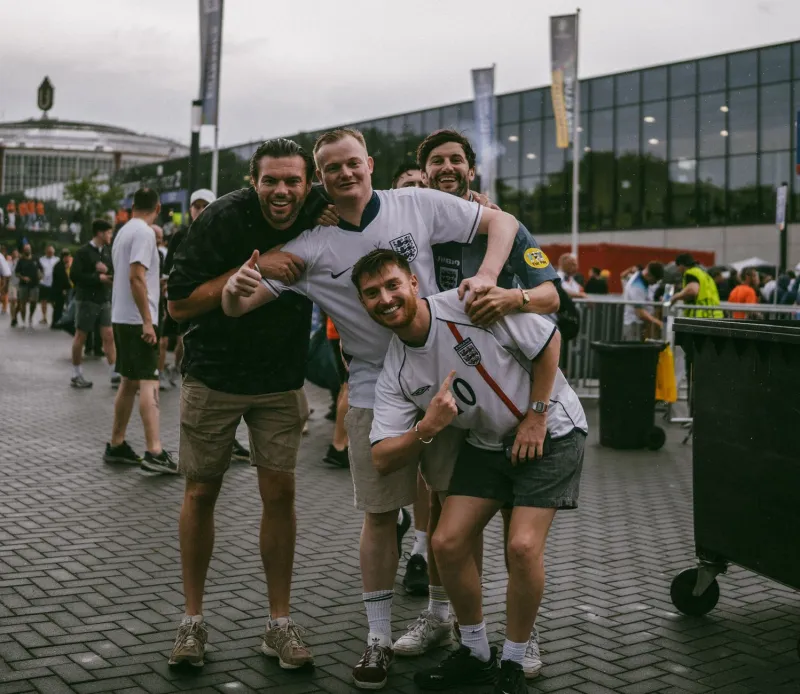
There's a bloke who stands near the away end turnstiles at a certain ground in the Midlands every other season. He's been there for thirty-odd years. Home fans know his face. He knows theirs. Nobody's ever asked his name. Nobody needs to. When he turns up, there's a nod. Maybe a word about the weather, or the state of the car park. Then he goes in, and they go in, and for ninety minutes they're on opposite sides of everything that matters.
After the whistle, sometimes, there's another nod.
This is the thing about long rivalries that never quite makes it into the think pieces or the television punditry. The hatred — and it is real, don't let anyone tell you otherwise — exists alongside something else entirely. Something that doesn't have a clean name.
What Decades of Showing Up Actually Does to People
Fan loyalty is usually discussed in terms of what it means to your club. The colours, the history, the suffering, the occasional joy. But spend enough time following football and you start to accumulate something else: a familiarity with the people who've been doing the exact same thing from the other direction.
Dave, a Sheffield United supporter in his late fifties who asked us not to use his surname, put it plainly. "You end up knowing Wednesday fans better than some of your own family," he said. "Not liking them. Knowing them. There's a difference. I can tell you how certain lads from their end will react to a bad referee decision before it happens. I've been watching them for thirty years."
That accumulated observation builds a strange kind of intimacy. You learn each other's rhythms. You know who sings when things are going badly and who goes quiet. You notice when a familiar face stops turning up and wonder, briefly, what happened to them.
It's not warmth. But it's not nothing.
The Unwritten Code Nobody Wrote Down
Every long-standing rivalry has its own version of the rules. They're never discussed, never voted on, never put in a programme. They just exist, passed between generations of fans the way most terrace knowledge gets passed — through observation and repetition.
Some of them are practical. You don't park in certain streets. You use certain pubs and leave others alone. You don't wear the shirt into town on a derby day. These are the obvious ones, the ones that occasionally get written up when something goes wrong and a journalist needs context.
But there are subtler ones too. The acknowledgement that a good goal is a good goal, even from the away end. The quiet respect for a fan who's clearly been supporting their club since before you were born. The unspoken agreement, in certain grounds at certain times, that the two sets of supporters can share a concourse without it becoming an incident.
Janet, a Nottingham Forest supporter who's followed her club home and away for over two decades, described standing in a motorway services after a defeat, surrounded by Derby fans who'd just won. "They were celebrating, obviously. But one of them, older bloke, just said, 'Hard luck, love.' That was it. I wanted to be furious but I couldn't be. That's just football, isn't it."
That moment — small, unremarkable, forgotten by everyone except Janet — is exactly the kind of thing this piece is about.
When Respect Becomes Complicated
None of this is straightforward. The same fans who share a nod outside a ground will sing horrible things about each other's cities for the full ninety minutes. The same bloke who says "hard luck" in a services will be absolutely delighted when his team does the double over yours next season.
And that's fine. That's the point. The respect and the rivalry aren't in conflict — they coexist, because both of them are real.
What gets lost in a lot of football discourse is the idea that you can genuinely dislike a club, genuinely want them to lose every single game they ever play, and still hold a certain regard for the people who support them. The two things aren't contradictory. They're actually part of the same thing.
"I respect Millwall fans," said one Charlton supporter we spoke to, with the careful tone of a man choosing his words very precisely. "I respect that they show up, they're loud, they care. I also want them to be relegated every year until the end of time. Both of those things are completely true."
What Gets Built in the Long Run
The really interesting thing happens over decades rather than seasons. Fans who've been going to the same fixtures since the 1980s have a shared archive that goes beyond results and tables. They were in the same places during the same moments. They remember the same grounds before they were redeveloped, the same players before they were legends, the same era of football before money changed everything.
That shared timeline creates a bond that has nothing to do with affection and everything to do with experience. You were there. So were they. Neither of you chose to be on the same side, but you were both in the same story.
A West Ham fan we spoke to — who'd been going to games since the late 1970s — talked about seeing a familiar face from the Millwall end at a charity match a few years back. They ended up talking for half an hour. "We'd been going to the same games for forty years," he said. "Never spoken. But we knew each other's history, in a way. We knew what the other one had been through as a fan. That's not nothing."
It's not nothing. It might not be friendship, and it definitely isn't love, but it's a kind of recognition — a mutual acknowledgement that you've both been doing this long enough to deserve a certain amount of credit.
The Terrace Knows
This stuff doesn't get talked about much because it doesn't fit the narrative that most people want from football rivalries. You're supposed to hate them, full stop. No asterisks, no qualifications, no complicated feelings.
But the terrace — the real terrace, the one made of people who've been going for years rather than the online version — knows better than that. It knows that the person in the away end has made the same sacrifices, told the same lies to get out of family commitments, driven the same horrible motorway miles in the same miserable weather.
That doesn't make them your friend. But somewhere along the way, across all those Saturdays and all those nods and all those shared moments in the same places at the same times, it makes them something.
We just haven't got a word for it yet.