Know Your Patch: The Invisible Map Every Terrace Regular Lives By
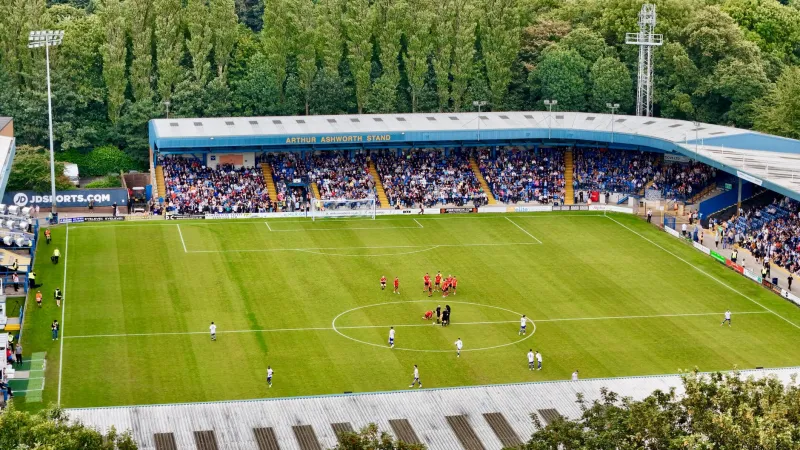
Walk into any ground in the country for the first time and you'll immediately be handed the official version of how things work. There's a seat number, a block letter, maybe a row printed on your ticket. Simple enough. What nobody tells you — what nobody can tell you, really — is that underneath all of that, there's an entirely different map. One drawn in habit, reputation, and decades of unspoken agreement.
This is the real geography of the terrace. And if you don't know it, you'll find out soon enough.
The Front Line and What It Means
At most grounds, the front rows of a home end are not simply the closest to the pitch. They carry a particular social weight. In many cases, this is where the youngest lads congregate — the teenagers who want to be seen, who sing the loudest and sometimes the most inventively, who are auditioning, in a way, for a kind of belonging. There's an energy down there that's borderline chaotic, and that's precisely the point.
But don't mistake youth for lack of order. Even among that noise, there are established faces. The lad who started the chant everyone now knows. The group who turned up three seasons before the rest and claimed their corner like it was sovereign territory. Newcomers who pitch up at the front expecting a free-for-all quickly learn that the chaos has its own quiet structure.
Ask any long-standing regular and they'll tell you the same thing: you don't just stand somewhere. You earn somewhere.
The Spine of the Stand
Mid-terrace, or the middle rows of a seated end, is where things get interesting. This tends to be the spine of a proper support — the people who've been coming for fifteen, twenty, thirty years and have no interest in performing for anyone. They're not at the front because they don't need to prove anything. They're not at the back because they're not there to spectate.
These are the ones who know the words to every song, including the verses that got dropped around 2004. They're the ones who'll turn and give you a look — not hostile, but measured — if you start a chant at the wrong moment or clap sarcastically after a goal goes in against you. That look says everything. We don't do that here.
Families often cluster in specific pockets of this middle zone too, usually towards the edges where the noise drops just enough for a ten-year-old to enjoy themselves without being completely overwhelmed. These spots are almost always the same week after week, passed down like allotments.
The Back Row Brotherhood
The back of the stand is its own world entirely. At lower league grounds especially, this is where you'll find the quiet observers — the men and women who've watched so much football that the game itself has become secondary to the ritual of watching it. They arrived before the gates opened. They've got a flask. They will offer considered, low-volume opinions on the centre-half's positioning that would not embarrass a UEFA coaching manual.
There's also, at certain grounds, a more specific back-row culture: the older ultras who've graduated from the front, the ex-players who drift in on cold Tuesday nights, the scouts trying to look like they're not scouts. The back row sees everything and says very little. It rewards patience and punishes loudness.
Rock up there buzzing from the car park, talking over everyone, and you will feel the temperature drop. Nobody will say a word. They won't need to.
When Someone Gets It Wrong
It happens. A group of lads on a stag do pile into the wrong section of a lower league ground, all replica shirts that are slightly too clean and pints that were slightly too large. They're in the wrong place and within about four minutes, everyone in a twenty-metre radius knows it.
Or the away fan who drifts, accidentally or otherwise, into the home section and spends ninety minutes in a kind of suspended social agony, careful not to react too visibly to anything.
Or — perhaps the most common version — the well-meaning newcomer who plants themselves in a spot that has, without any signage or announcement, belonged to the same person for eleven years. The first time, you get a polite mention. The second time, less polite. The third time, you've created a situation.
These moments aren't malicious, usually. They're the friction that comes from an invisible system meeting someone who hasn't yet been handed the key. Most regulars remember being that person once. Most will quietly redirect rather than escalate. But the correction will come, one way or another.
How You Actually Learn the Map
Nobody sits you down and explains it. That's rather the point. You learn by watching who moves for whom, who nods at whom, which conversations happen naturally and which ones require an introduction you haven't earned yet.
You learn by going regularly. Not occasionally, not when there's a big game — regularly. Show up enough times and the map starts to reveal itself. You begin to notice that the bloke in the yellow jacket always stands slightly left of the crash barrier at the Kop end, and that nobody stands in front of him. You notice that the group near the corner flag get there half an hour early and leave five minutes before the whistle, every single time, without fail.
And slowly, through nothing more dramatic than repetition, you find your own patch. A spot that starts to feel like yours. Where the people around you begin to recognise your face, then your voice, then your opinions. Where you stop being someone who watches the match and start being someone who belongs to the ground.
Why It Matters
You might read all of this and think it sounds unnecessarily complicated. Why can't people just stand wherever they like?
They can, technically. Nothing stops them. But the invisible geography of a terrace isn't about gatekeeping for the sake of it. It's the accumulated expression of a community that has formed organically over years, sometimes decades. The zones exist because people with shared habits and shared intensities have naturally gravitated toward each other. The ultras don't stand together because someone drew a line — they stand together because they found each other.
When that geography is respected, the whole stand works better. The noise builds properly. The energy flows. The families feel safe, the singers feel free, and the quiet observers get their peace.
Disrupt it carelessly and you feel it — not dramatically, but in the way a slightly off-key note feels in a song you know by heart.
Learn it, though, and you'll understand your club in a way that no fixture list or Wikipedia page will ever give you. You'll know where you are. And more importantly, you'll know where you belong.