Sung From the Soul: Why Terrace Chants Are the Only Honest Thing Left in Football
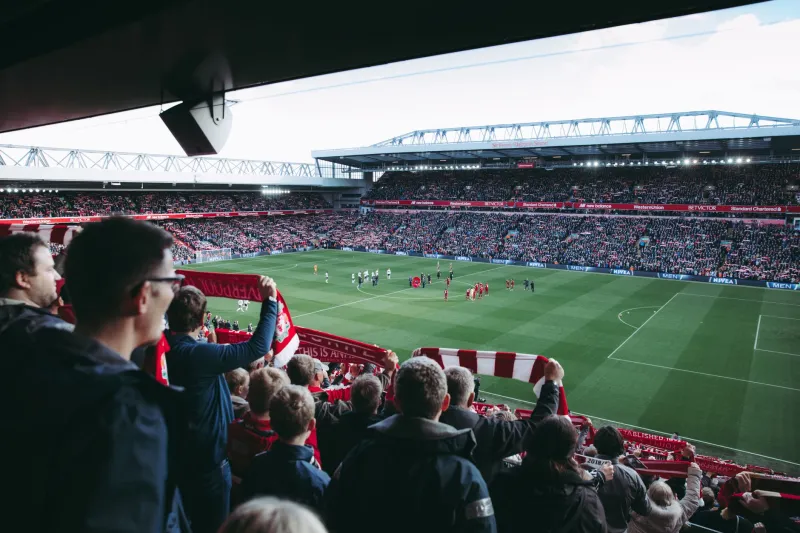
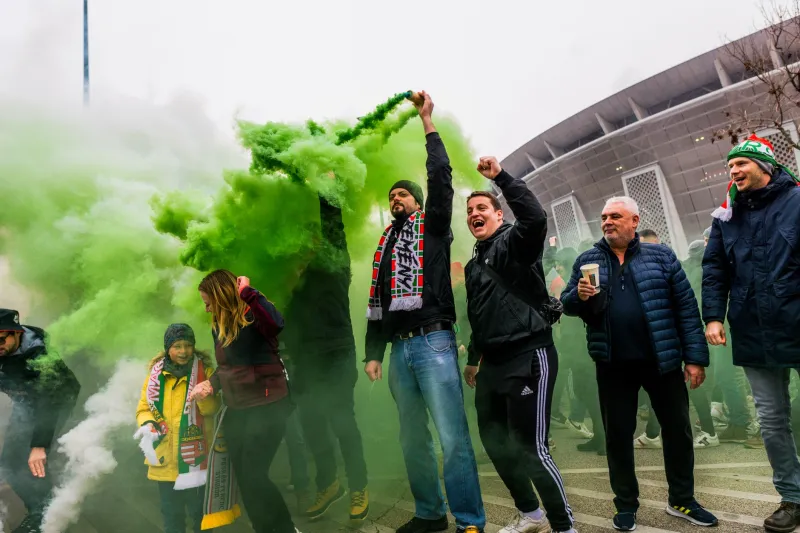
Somewhere between the half-time raffle and the sponsored goal-of-the-month announcement, modern football occasionally remembers what it's supposed to feel like. It usually sounds like this: a murmur from one corner of the ground, a few voices finding each other, and then — without warning, without rehearsal, without a single person in a headset giving the green light — an entire end erupts into something that no marketing department on earth could have manufactured.
That's a terrace chant. And it might be the last genuinely unscripted thing in British sport.
The Spontaneous Art Form Nobody Takes Seriously Enough
We tend to talk about chants as background noise — atmospheric colour in a match report, a paragraph near the bottom about the fans "getting behind their team." But spend any real time thinking about what's actually happening and it starts to feel like something closer to folk art.
A song emerges. Nobody calls a meeting. There's no committee, no vote, no official launch. Someone — usually anonymous, often half-cut — starts something in a pub or on a coach or in the away end, and if it's got the right rhythm, the right bite, the right timing, it spreads. Within weeks it might be echoing around grounds across the country. Within months it's on YouTube. Within a year, it's part of a club's identity.
That's genuinely extraordinary when you stop to think about it. These are collaborative creative works produced by thousands of people who've never met, refined through live performance in front of crowds, and preserved entirely through oral tradition. No record deal. No publishing rights. Just collective memory and lung capacity.
From the Kop to the Kassam: Regional Identity in Three Chords
What makes terrace songs so fascinating — and so irreplaceable — is that they're one of the few places where a club's actual personality bleeds through. Not the personality the club wants you to see on its Instagram grid. The real one.
You can tell a lot about a fanbase by what it sings. Liverpool's Anfield has always had a theatrical quality to its support, a sense of occasion that lends itself to grand, sweeping anthems. You'll Be Never Walk Alone is the obvious example, but even the way new chants emerge at Anfield tends toward the dramatic. Contrast that with, say, Millwall, where the songs have always carried a defiant, us-against-the-world edge that reflects decades of feeling looked down on by the football establishment. Or the sharp, satirical wit that tends to come out of grounds like Selhurst Park, where the Holmesdale Faithful have turned choreography and noise into something approaching performance art.
These aren't accidents. They're expressions of genuine community identity. The kind of thing that no rebrand, no new crest, and no American ownership group can simply overwrite — however hard some of them try.
The Viral Age and the Beautiful Chaos It Brought
Social media did something interesting to terrace culture. It could have sanitised it — turned it into content, smoothed off the rough edges, made it safe for brand partnerships. In some ways it did exactly that. But it also gave brilliant, weird, deeply niche football humour a global audience it never had before.
Think about the chants that have genuinely broken through in recent years. The frankly unhinged creativity applied to players with unusual names. The songs that somehow manage to be simultaneously affectionate and brutal about a striker who can't finish. The remixes of pop songs so perfectly adapted to football that you can't hear the original anymore without thinking of some bloke at Bramall Lane.
These moments go viral not because a club's social media team pushed them, but because they're funny, or clever, or strangely moving, or all three at once. They spread because they're real. There's a reason nobody shares clips of the half-time entertainment.
The Ones That Actually Mean Something
Not every chant is about wit or creativity. Some of the most powerful moments on a terrace are the simplest ones — and the ones that carry the most weight tend to arrive when nobody's expecting them.
A player who's come through the academy, finally getting his moment, and hearing his name sung for the first time by the end that watched him grow up. A manager who's just been sacked, getting a send-off from supporters who know he gave everything. A minute's applause for someone who's no longer here, turning into something louder and longer than anyone planned, because the feeling just demanded it.
These are the moments that remind you that football grounds aren't entertainment venues with a game in the middle. They're places where communities gather, and chants are how those communities speak. Not to the players or the board or the TV cameras — to each other.
What Gets Lost When the Noise Gets Managed
Here's the uncomfortable truth that sits underneath all of this: the more football tries to control the atmosphere, the worse the atmosphere gets.
We've all been to grounds where the DJ cranks up the volume between every stoppage, where a pre-recorded drumbeat tries to manufacture noise that the crowd aren't generating naturally, where a big screen tells you when to make some noise with a graphic of a pair of hands clapping. It's excruciating. Not because the intention is bad, but because it fundamentally misunderstands what atmosphere actually is.
Atmosphere isn't something you can pump in through speakers. It's the by-product of people who care deeply about something being in the same place at the same time. You can't schedule it. You can't brand it. The best you can do is get out of its way.
The clubs that understand this — that trust their supporters to generate something genuine if you give them the space and the conditions to do it — tend to have the best atmospheres in the country. It's not a coincidence.
Long May the Chaos Continue
Football will keep changing. Prices will keep rising. Ownership structures will keep getting more complicated. The product — and it is a product now, whether we like it or not — will keep being refined and packaged and delivered to us through an ever-growing number of screens.
But somewhere in all of that, someone will start singing something in the away end. It'll be daft, or sharp, or oddly poetic, or completely unprintable. It'll spread without anyone's permission. It'll capture something true about that club, that moment, that group of people standing in the cold together.
And for three minutes, football will remember what it actually is.
That's worth protecting. That's worth celebrating. That, more than any rebrand or renovation or marquee signing, is the soul of the game — sung out loud, unscripted, from the terrace.